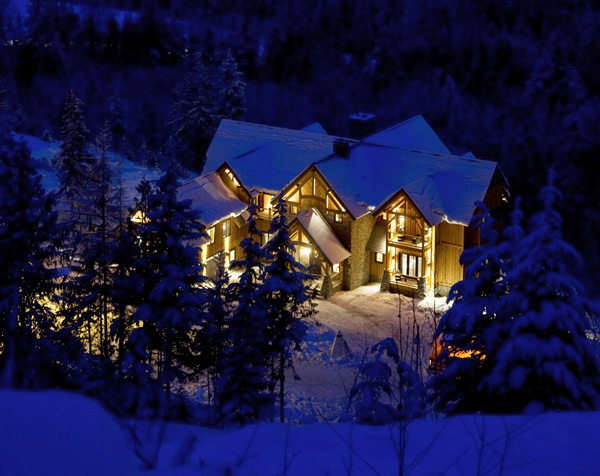
Timber frame homes are energy efficient, but the honest answer is that performance depends on the full building system, not the timber alone. The real drivers are the combination of large-dimension structural timber, Structural Insulated Panels (SIPs), and thoughtful passive solar design. When those elements work together, a timber frame home can significantly outperform conventional stick-built construction on heating and cooling costs. Hamill Creek Timber Homes has been designing and manufacturing timber frame structures since 1989, and energy performance is one of the most consistent advantages our clients experience after move-in.
How Timber Frame Construction Supports Energy Efficiency
Timber frame construction contributes to energy efficiency in two distinct ways. First, the structural frame eliminates interior load-bearing walls, which means insulation can wrap the entire exterior of the home continuously, with no interruptions from studs or structural elements breaking the thermal envelope. Second, large-dimension timbers like Douglas Fir have natural thermal mass that helps regulate interior temperatures.
Thermal Mass vs. Thermal Bridging
Thermal mass refers to a material’s ability to absorb, store, and slowly release heat. Douglas Fir, Hamill Creek’s primary timber species, has strong structural density that works in your favor on both sides of the calendar. During cold nights, the mass of the timber frame slowly radiates stored heat back into the living space. During warm days, it absorbs heat that would otherwise raise the interior temperature. This natural buffering reduces how hard your HVAC system has to work to maintain comfort.
By contrast, stick-built framing, the 2×4 or 2×6 wood studs used in most conventional homes, creates thermal bridges at every stud location. Wherever a stud meets the exterior sheathing, heat transfers through the framing member, bypassing the batt insulation between studs. In a timber frame home, the insulation layer wraps the outside of the entire structural frame, eliminating those bridging points. As Dwight Smith, CEO of Hamill Creek Timber Homes, puts it: “The more mass you have in a house, the more it retains heat.”
The Role of SIPs in Timber Frame Energy Performance
Structural Insulated Panels (SIPs) are the primary timber frame house insulation system used in timber frame construction, and they’re widely considered one of the most energy-efficient wall and roof systems available today. A SIP consists of a rigid foam core, typically expanded polystyrene, sandwiched between two structural boards of oriented strand board (OSB). The result is a panel that provides both structural integrity and exceptional insulation in a single assembly.
SIPs achieve near-zero air infiltration and deliver R-values that standard batt insulation simply can’t match. In northern climates, wall panels typically achieve R-22 to R-40, while roof panels reach R-42 to R-50, depending on geographic location and panel thickness. Studies from the Oak Ridge National Laboratory have shown that SIP homes require significantly less energy to heat than comparable stick-frame construction, largely because of the elimination of air leaks at stud locations.
Hamill Creek Timber Homes offers a complete Timber Enclosure System that integrates SIPs with the timber frame as a coordinated package. The system includes SIPs panels, windows, doors, and insulation details engineered to work together. Hamill Creek creates connection details that allow for easy installation of drywall or tongue-and-groove directly to the SIP panels, minimizing site time while delivering better quality and a more airtight result than field-assembled insulation systems.
Airtight Construction and Passive Solar Design
SIPs handle the thermal envelope, but two additional strategies make a meaningful difference in real-world energy performance: airtight construction detailing and passive solar design.
Airtight construction means carefully sealing every transition point, around windows, doors, and where the SIP panels meet the foundation and roof structure. In a stick-built home, air leaks through dozens of small gaps in the framing, drywall, and insulation. In a well-built timber frame home with SIPs, those paths are largely eliminated. The practical result is a home that holds its temperature much more efficiently, with less reliance on mechanical heating and cooling to compensate for constant air exchange.
Passive Solar Design in Cold Climates
Passive solar design uses the building itself, its orientation, window placement, roof overhangs, and thermal mass, to collect and manage solar energy. South-facing windows sized and positioned to admit low winter sun, combined with roof overhangs calculated to shade those same windows in summer, can meaningfully reduce heating loads in cold climates without adding any mechanical systems. Hamill Creek’s design team uses solar modeling to track how the sun moves over a home’s specific geographic location throughout the year, ensuring that each design takes maximum advantage of available solar gain. In both cold climates where heating dominates and hot climates where cooling is the primary concern, the design approach delivers measurable results. This is client-driven: homeowners who prioritize energy performance can expect these principles to be built into the design from the first layout.
Timber Frame vs. Stick-Built: Energy Performance Compared
When a timber frame home is built with a quality SIPs enclosure system, it consistently outperforms standard stick-built construction on air tightness and thermal performance. The key metric is air changes per hour (ACH), how many times the interior air volume is replaced by outside air in an hour due to leakage. SIP homes routinely achieve ACH values well below stick-frame homes of comparable size, which translates directly to lower heating and cooling loads.
That said, the advantage comes from the complete building envelope system, not from timber framing alone. A timber frame home with poorly detailed insulation won’t automatically outperform a well-built conventional home. The combination of the structural timber frame, an integrated SIPs enclosure, and careful construction details is what produces the performance gap. Hamill Creek clients have been consistently surprised by how easy their homes are to heat, with several exceeding local energy step code requirements. One client recently received a $15,000 grant from their local utility for surpassing those standards. Hamill Creek works with energy auditors during the design process to model performance and adjust insulation levels or mechanical systems accordingly.
Frequently Asked Questions About Timber Frame Home Energy Efficiency
Do all timber frame homes use SIPs?
Not necessarily, but SIPs are the most common and highest-performing insulation system used with timber frame construction. Because the structural timber frame handles all the load-bearing work, the wall and roof enclosure can be built entirely with SIPs panels rather than relying on framed walls with batt insulation. Most custom timber frame homes designed for strong energy performance use SIPs as the primary enclosure system. Timber frame kits can also be paired with SIPs as part of a Timber Enclosure package.
What R-value can a timber frame home achieve with SIPs?
Timber frame homes built with SIPs enclosure systems typically achieve wall insulation values of R-22 to R-40 and roof insulation values of R-42 to R-50 in northern climates, with exact values depending on panel thickness and geographic location. These figures significantly exceed what standard 2×6 batt insulation achieves, and the near-airtight nature of SIP construction means the stated R-value translates more directly to real-world performance than batt insulation in a framed wall.
Can timber frame homes meet energy step codes and green building standards?
Yes. Timber frame homes built with SIPs and designed with energy performance as a priority can meet, and often exceed, local energy step codes and Net Zero targets. Hamill Creek incorporates green timber framing principles into its design process, and the company works with energy auditors to model performance before construction begins. Several completed Hamill Creek homes have qualified for utility rebates and grants by surpassing required energy standards.
Building an Energy-Efficient Home Starts With the Right System
Timber frame homes built with SIPs insulation, passive solar principles, and airtight construction are among the most energy-efficient residential building systems available. The thermal mass of large-dimension Douglas Fir timbers, combined with the near-airtight envelope of a well-designed SIPs enclosure, creates a home that holds its temperature naturally, reducing HVAC demand, lowering energy bills, and delivering comfort that homeowners consistently remark on after their first winter.
Hamill Creek Timber Homes brings together 35+ years of timber frame design and manufacturing experience, an in-house design team that models solar performance for each project, and an integrated Timber Enclosure System engineered to perform at the highest levels. Whether you’re building in the mountains of Colorado or the forests of British Columbia, the right system makes all the difference.
If you’re designing a home where energy efficiency matters, whether it’s a mountain retreat in a cold climate or a year-round primary residence, Hamill Creek Timber Homes can help you build a structure that performs as well as it looks. Connect with our team to discuss your project.
Sources
Blog Archive / Timber Frame Home Financing: Mortgages, Construction Loans & What to Expect