New homebuyers face real challenges when choosing a building method. You might feel overwhelmed by different terminology and options. We’re here to clear up that confusion by explaining the key differences between timber frame, post-and-beam, and log home construction.
When you compare timber frame vs post and beam or timber frame vs log home construction, you’ll discover differences in durability, aesthetic appeal, personalization, and design flexibility. With 35+ years of experience building custom timber frame homes, Hamill Creek can help you understand the real structural and visual differences between these building methods.
What Makes Each Construction Method Different
Let’s break down timber frame, post-and-beam, and log home construction so you can see what sets them apart.
Timber Frame Construction
- Construction methods: Heavy timber posts and beams with mortise-and-tenon joinery secured by wooden pegs. You’ll see exposed beams throughout the interior.
- Wall system: Non-structural infill walls (typically SIPs – Structural Insulated Panels) sit separate from the timber frame structure itself.
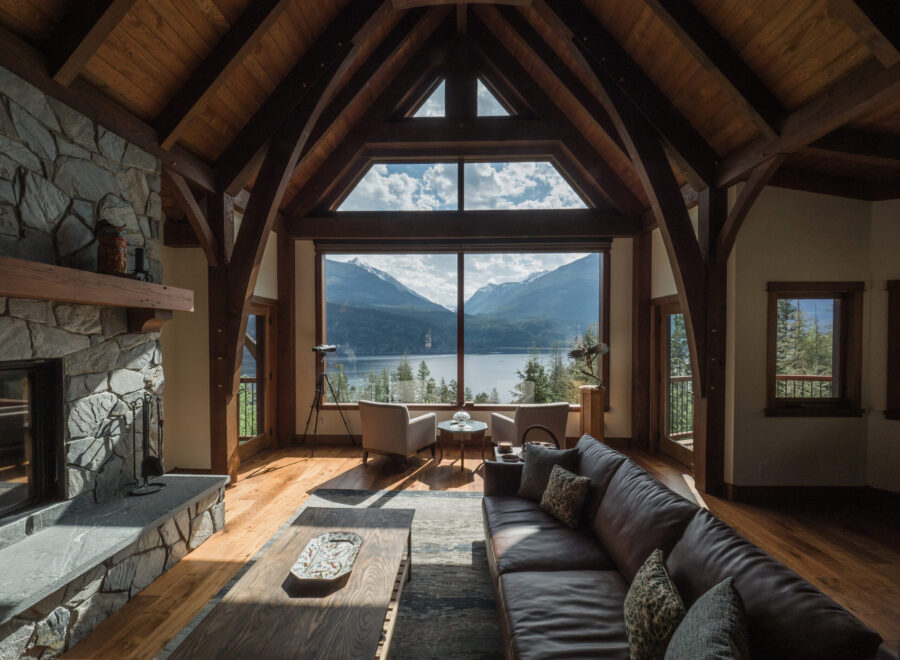
- Visual appearance: Think dramatic exposed heavy timbers, vaulted ceilings, and wide-open floor plans.
- Key advantages: Maximum interior design flexibility. Want to move walls around later? No problem. The walls can be moved or removed without affecting the structure.
- Traditional craftsmanship: This technique goes back centuries. Some structures have been standing for 800+ years. Japanese timber frame buildings have even survived earthquakes thanks to their flexible joinery.
Post-and-Beam Construction
- Construction methods: Heavy timber posts and beams connected with metal plates, brackets, and bolts.
- Wall system: Similar to timber frame, using non-structural infill walls (often SIPs).
- Visual appearance: Clean, modern aesthetic with exposed timbers but less ornate joinery details than timber frame.
- Key advantages: Faster construction timeline because the joinery’s simpler. You get a contemporary look with moderate customization options.
- Primary distinction: Metal connectors instead of traditional wooden joinery. That’s the big difference from timber frame.
- What you trade off: You still get open floor plans, but connections are more rigid than timber frame.
Log Home Construction
- Construction methods: Horizontal logs stacked and interlocked at corners. Here’s the thing—the logs are both the structure AND the walls.
- Visual appearance: Classic rustic aesthetic with exposed logs inside and out.
- Key characteristics: Logs “settle” over time, typically 3-5 inches during the first two years. This means you need special provisions for doors, windows, and plumbing.
- Insulation approach: The thermal mass of logs provides natural temperature regulation, but gaps between logs require careful sealing and chinking.
- Traditional appeal: Frontier cabin aesthetic with deep American roots.
At Hamill Creek, we specialize in timber frame and post-and-beam construction. We don’t build log homes; they’re more expensive and harder to insulate. But we do offer hybrid timber frame homes that combine construction methods for homeowners who want the benefits of multiple design approaches. You can achieve various aesthetics and meet stricter budget requirements with this hybrid approach.
Comparing Costs, Flexibility, and Performance
Here’s how timber frame vs post and beam and timber frame vs log home stack up in the areas that matter most.
What You’ll Invest
Average cost ranges:
- Timber Frame: $300-$500/sq. ft. fully finished. The timber frame itself runs $60-$90/sq. ft. Typically the highest upfront cost because of specialized joinery and master craftsmanship.
- Post-and-Beam: $300-$500/sq. ft. fully finished. The framing costs more than timber frame, depending on hardware costs. Mid-range pricing, less labor-intensive than timber frame.
- Log Homes: Varies widely based on log type, size, and finish quality.
What affects the cost:
- Materials: Timber frame uses premium timbers plus SIPs. Log homes require large quantities of logs. Post-and-beam uses timbers plus metal hardware.
- Labor: Timber frame requires master craftsmen for traditional joinery. Log homes need specialized stacking and sealing. Post-and-beam is the most straightforward to construct.
- Complexity: Custom timber frame with intricate joinery increases cost. Simpler post-and-beam or standard log packages reduce cost.
Typical build timelines:
- Design phase: 8-12 weeks
- Permit phase: 2-8 weeks, depending on your area
- Construction phase: About a year, depending on size
- Timber Frame: 3-12 months, depending on customization level
- Post-and-Beam: Typically 6-10 months
- Log Homes: Usually 10 months to 2 years due to settling time
Long-term value:
All three hold value well. But timber frame homes often command a premium resale value because of their craftsmanship and flexibility for future owners.
Design Flexibility and Future Changes
When you’re weighing timber frame vs post and beam, you get comparable interior design flexibility. With timber frame vs log home, timber frame definitely wins for design flexibility.
Timber Frame flexibility:
Non-structural walls can be moved, removed, or reconfigured anytime without affecting the timber frame structure. It’s easy to add onto the structure with additional timber frame bays. You can create dramatic open floor plans with soaring ceilings up to 20+ feet. Perfect if your family’s evolving or you’re planning future remodeling.
Want an example? Homeowners can transform a great room into several bedrooms or open up a kitchen without structural implications.
Post-and-Beam flexibility:
You can easily create open floor plans. Expansion is possible, but connections are more rigid than timber frame. It offers a good balance if you want openness without maximum customization needs.
Log Home limitations:
Walls are structural components, so you can’t easily move or remove interior walls. Expansion is complex because of log settling and structural integration requirements. Your interior layout is largely fixed once the home’s built. Adding onto a log home requires careful engineering to match and integrate with the original structure. Best suited if you know your exact layout needs from day one.
Energy Efficiency, Maintenance, and Durability
Energy Efficiency:
- Timber frame vs post and beam: Both can achieve R-40+ insulation values when using SIPs. They provide an extremely energy-efficient and airtight building envelope when properly installed.
- Timber frame vs log home: The thermal mass of logs provides natural temperature regulation and stability. R-value typically ranges from R-8 to R-15, depending on log size and type. Gaps between logs require vigilant sealing and chinking to maintain energy efficiency. Logs benefit from thermal mass but may not match the insulation performance of SIPs.
Maintenance Requirements:
Timber frame:
- SIP panels require minimal maintenance
- Exterior finish maintenance varies by material choice (siding, stone, etc.)
- Interior exposed timbers: inspect annually, reapply finish every 3-5 years in high-traffic areas
- Overall maintenance level: LOW
Post-and-beam:
- Similar to a timber frame in most respects
- Metal connections should be inspected periodically
- Overall maintenance level: LOW
Log home:
- Ongoing log sealing and chinking maintenance every 3-5 years
- Staining and sealing the entire exterior every 3-7 years, depending on climate exposure
- Monitor for settling issues during the first 2-3 years and make necessary adjustments
- Regular inspection for insect damage and moisture intrusion
- Overall maintenance level: MODERATE to HIGH
Durability and Longevity:
All three methods can last 100+ years with proper care. Timber frames’ traditional joinery has demonstrated exceptional longevity—up to 800+ years in Europe and Asia. Post-and-beam modern connection systems are extremely strong and durable. Log homes require more active preservation efforts, but can last for generations.
All three methods meet or exceed building codes when properly engineered. Timber frame construction often exceeds seismic requirements because of its flexible joinery.
Choosing What’s Right for Your Vision
There’s no one-size-fits-all construction method. The right choice aligns with your priorities, lifestyle, and long-term plans.
Choose Timber Frame If:
- You want maximum interior design flexibility and future expansion options
- Traditional craftsmanship and heirloom joinery matter to you
- You’re building a legacy home to pass down through generations
- Energy efficiency is a top priority
- You want dramatic, soaring interiors with exposed beam features
- You value low-maintenance living
Choose Post-and-Beam If:
- You want open floor plans with a modern aesthetic
- You prefer clean lines over ornate traditional joinery
- Your budget is moderate, and you want good value
- You appreciate exposed timbers but prefer a contemporary look
Choose Log Homes If:
- You’re committed to the classic log cabin aesthetic inside and out
- You want rustic, traditional appeal
- You’re willing to invest time and effort in ongoing maintenance
- Your layout is finalized and won’t need future changes
- You value the thermal mass and natural insulation properties
- You’re building in a rural or mountain setting where log homes fit contextually
Questions to Ask Your Builder:
- How long have you been building this specific construction method?
- Can you provide references and examples of past projects?
- How do you handle settling, expansion, or seismic codes for this construction type?
- What’s the realistic timeline and total investment range for my project?
- What warranty and post-build support do you provide?
- Can you guide me through the entire design and customization process?
Your Next Step: From Vision to Reality
It’s exciting to realize you can have the home of your dreams, whatever design style that happens to be. But before you start making your vision a reality, you need to determine your personal priorities:
- Budget considerations
- Design flexibility needs
- Maintenance tolerance
- Long-term plans
- Aesthetic priorities
- Lifestyle needs
From the breakdown we’ve provided here, you’ve gained a full understanding of the similarities and differences between timber frame construction, post and beam construction, and log cabin construction. This detailed comparison should help you determine which type of construction aligns with your priorities.
With 35+ years of experience, Hamill Creek’s timber frame specialists can help you explore your options and design the perfect timber frame home design for your vision and budget. Our extensive hands-on experience with timber framing and post and beam construction lets us build homes that exceed your expectations.
Contact the timber frame specialists at Hamill Creek to design and build the perfect timber frame home for your vision and budget.
Timber Frame Home Comparison FAQs
Here are some of the most frequently asked questions we get from potential clients:
Which style costs more upfront?
Timber frame costs more upfront. Post-and-beam cost is mid-range, while log cabin costs can vary widely depending on various factors.
Can I expand a log or timber frame home later?
Expanding a log home later is difficult and costly. Expanding a timber frame home is much easier because of the flexibility of its framing and interior wall design requirements.
What maintenance differences should I expect?
Timber frame and post-and-beam have low maintenance requirements, while log homes have moderate to high maintenance requirements.
Are log homes energy efficient?
Log homes can be energy efficient, but they’re not usually as energy efficient as the SIPs (structural insulated panels) often used in timber frame and post-and-beam homes.
How do I choose a builder for these styles?
Look for a builder with the experience and connections to ensure a streamlined build that adheres to your design needs and budget. Hamill Creek has over three and a half decades of experience and the connections (such as sourcing timbers and craftspeople) to make sure your build goes smoothly.
Blog Archive / Timber Frame Home Lifespan, Durability, and Resale Value