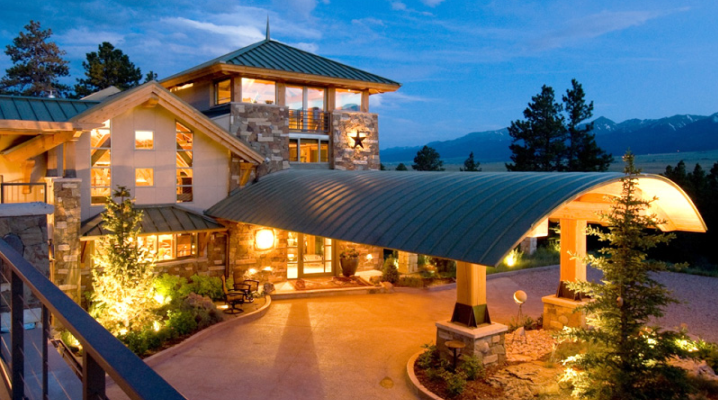
The commercial construction landscape is shifting. More developers are choosing commercial timber frame construction for their lodges, restaurants, resorts, and outdoor living spaces, moving away from the cold uniformity of steel and concrete toward buildings that feel warm, distinctive, and memorable. Timber frame structures deliver the strength of conventional methods while creating spaces that guests actually want to spend time in.
Hamill Creek Timber Homes has designed and manufactured custom commercial timber frames since 1989. With over 35 years of experience and more than 120 commercial projects completed across North America and internationally, we’ve built the kind of spaces that give developers both the brand differentiation they’re looking for and the long-term durability they can count on.
Here’s what you need to know: the benefits, the building types it suits best, how costs compare, and what working with a specialist timber frame manufacturer actually looks like.
Why Commercial Developers Are Choosing Timber Frame Construction
Commercial timber frame construction gives developers something steel and concrete struggle to deliver: buildings that combine structural performance with genuine aesthetic appeal. The draw tends to fall into three categories:
- An open architectural space that would be difficult to achieve otherwise.
- Faster on-site assembly through prefabrication.
- The experiential impact of natural wood on guests and customers.
Timber frame buildings can span wide interiors without load-bearing walls, which allows for cathedral ceilings, open dining rooms, and expansive lobbies that feel generous rather than divided. The structural timbers carry the load, leaving the interior free for the design choices that would be prohibitively expensive in conventional construction.
Prefabrication is the other quiet advantage. Every Hamill Creek timber frame is designed in 3D CAD, cut on CNC machinery in our Meadow Creek, BC facility, and test-fit on the shop floor before it ships. That process matters for commercial developers because it reduces the amount of skilled labor required on-site and shortens construction time. The specialty work happens in our production facility, not on your build site.
And then there’s the feeling. Timber framing uses large Douglas Fir beams joined with traditional mortise and tenon joinery secured by oak pegs, the same technique that has kept European timber frame buildings standing for centuries. The result isn’t just a building that lasts. It’s a space where people linger longer, spend more, and come back.
Commercial Building Types That Benefit from Timber Framing
Timber frame commercial buildings work well across a wide range of hospitality, food and beverage, recreation, and community applications. Hamill Creek has built commercial timber frames for clients in Canada, the mainland United States, Hawaii, the Bahamas, and the British Virgin Islands, with project types spanning everything from intimate wineries to large destination resorts.
- Hospitality: Lodges, resorts, boutique hotels, and wellness retreats benefit from the warmth and character that exposed timbers bring to guest-facing spaces. Large open lobbies and vaulted great rooms are easier to achieve with timber framing than with conventional construction.
- Food and beverage: Restaurants, breweries, wineries, and tasting rooms use timber framing to create memorable dining environments. The acoustic properties of wood help soften the sound in busy rooms, and the natural aesthetic complements farm-to-table and craft-focused brands.
- Recreation and clubhouses: Golf clubhouses, ski resort day lodges, and event pavilions suit timber framing because open spans allow flexible programming, and the exposed trusses give the space a signature look.
- Community and event venues: Churches, wedding venues, and civic buildings use timber framing when they want a space that feels rooted and substantial. These buildings often last generations, and the aesthetic ages beautifully.
- Outdoor living spaces: Pavilions, pergolas, and covered patios attached to commercial properties extend the brand experience outdoors, which matters for resorts and hospitality venues where guests spend significant time outside.
For a sense of scale and scope, our commercial timber frame portfolio includes projects like the Kukio Golf Club Resort in Hawaii, where we designed complex round timber trusses under an exposed African thatch roof, a build that would have been nearly impossible with steel.
Timber Frame vs. Steel and Concrete for Commercial Projects
Timber frame commercial buildings typically cost about 20% more than steel or concrete up front, but the full picture changes when you factor in energy efficiency, operational savings, assembly speed, sustainability, and brand impact. For many commercial developers, the timber frame premium pays back through reduced operating costs and the ability to charge more for a distinctive, experience-driven property.
- Up-front cost: A fully completed commercial timber frame build averages around $400 per square foot and up, depending heavily on size, finishes, location, and complexity. Steel and concrete tend to run lower on the structural line item, though the gap narrows once you account for interior finishes in a steel-framed building that needs to replicate the character timber delivers natively.
- Energy performance: Hamill Creek pairs timber frames with structural insulated panels (SIPs) to create wall and roof assemblies that can perform close to twice as efficiently as conventional stick-built construction. Lower heating and cooling costs add up quickly in commercial buildings with long operating hours.
- Fire safety: Large timbers char predictably on the outside while maintaining their structural core, which is why the International Code Council expanded its guidance in 2021 to allow mass timber structures up to 18 stories. SIP panels carry a Class 1 fire performance rating.
- Sustainability: Wood is a renewable resource that sequesters carbon throughout its service life, while steel and concrete are among the most carbon-intensive materials in construction. For developers targeting LEED certification or pursuing a sustainability-forward brand, our approach to green timber framing gives you a credible, data-backed story.
- Acoustic and experiential quality: Wood absorbs and softens sound, which matters for restaurants, event venues, and hospitality spaces where noise levels directly affect guest experience. Steel and concrete tend to do the opposite.
The honest comparison is that timber costs more on day one and delivers more across decades of operation.
What to Expect: The Commercial Timber Frame Process
A commercial timber frame project with Hamill Creek follows a clear path from the first conversation through on-site raising. Typical design-to-delivery timelines run 8 to 12 weeks once drawings are finalized, and the prefabricated approach keeps the on-site portion short and predictable.
- Consultation and design: We start with your architect, engineer, or general contractor, or we work with you directly if you’re earlier in the process. Our in-house design team uses 3D CAD modeling to collaborate in real time, which means you see the frame before it’s built and have the chance to refine details before anything is cut.
- Engineering and drawings: Every Hamill Creek frame is reviewed and sealed by a registered engineer licensed in your jurisdiction. Our timber frame engineering covers projects worldwide, meeting every specific requirement from hurricane zones to heavy snow regions to high-seismic areas.
- Precision cutting and test-fit: Timbers are cut on our CNC equipment at the Meadow Creek facility, joined with traditional mortise and tenon joinery and oak pegs, and then fully test-fit on the shop floor before disassembly. Nothing ships until we’ve confirmed every joint fits exactly the way it’s supposed to.
- Shipping and on-site raising: Frames are carefully packaged, labeled with installation instructions, and trucked to your site. Because the complex work is already done, any qualified carpenter crew can handle the raising, which is one of the biggest advantages for commercial developers managing labor availability. The raising itself typically takes 5 to 10 days, depending on project size.
Our custom design process is built to reduce risk and surprises at every stage, which is why developers managing tight timelines and complex project scopes keep coming back for their next build.
Frequently Asked Questions About Commercial Timber Frame Construction
How much does commercial timber frame construction cost?
Commercial timber frame construction from Hamill Creek averages around $225 per square foot for a complete build, which is roughly 20% more than comparable steel or concrete construction. The final timber frame cost depends on size, location, design complexity, and finishes, and the biggest price swings usually come from design changes made after bidding. Once we have completed drawings, we provide a detailed estimate for the structure delivered to your site.
Can timber frame commercial buildings meet building codes?
Yes. Every Hamill Creek timber frame is engineered to meet the specific structural requirements of its location, whether that’s hurricane zones, high-seismic regions, or heavy snow areas. We use registered engineers licensed in each jurisdiction to review and seal the drawings, so the frame carries the credentials your permitting office needs.
How long do commercial timber frame buildings last?
Commercial timber frame buildings are designed to last centuries when properly maintained. European timber frame structures built in the medieval period are still standing today. The mortise and tenon joinery with oak pegs that Hamill Creek uses is the same method responsible for that longevity, paired with modern engineering and material science.
Are commercial timber frame buildings fire safe?
Large timbers perform well in fire because they char predictably on the exterior while maintaining their structural integrity beneath the charred layer. That’s why mass timber is now permitted up to 18 stories under the 2021 International Code Council guidance. Paired with Class 1 fire-rated SIP enclosure systems, these buildings meet or exceed the fire safety standards of conventional construction.
How quickly can a commercial timber frame project be delivered?
Once drawings are finalized, Hamill Creek’s typical design-to-delivery timeline runs 8 to 12 weeks. On-site raising usually takes 5 to 10 days because the frame arrives prefabricated, cut to tolerance, and labeled for assembly. The prefabrication approach shortens the overall construction schedule considerably compared to building on site from raw materials.
Build Something That Lasts
Commercial timber frame construction offers developers a rare combination: structural strength that meets any engineering requirement, design flexibility that steel and concrete can’t match, energy efficiency that lowers operating costs, and an aesthetic that genuinely moves guests and customers. For lodges, restaurants, resorts, clubhouses, and the full range of hospitality and community spaces, timber framing isn’t just a construction choice. It’s a long-term brand investment.
Hamill Creek Timber Homes brings over 35 years of specialized experience, more than 120 completed commercial projects, and a production facility built specifically to handle commercial-scale timber frame manufacturing across North America and internationally.
Your next commercial development deserves a building that leaves a lasting impression. Connect with the Hamill Creek Timber Homes team to explore how commercial timber frame construction can elevate your project.