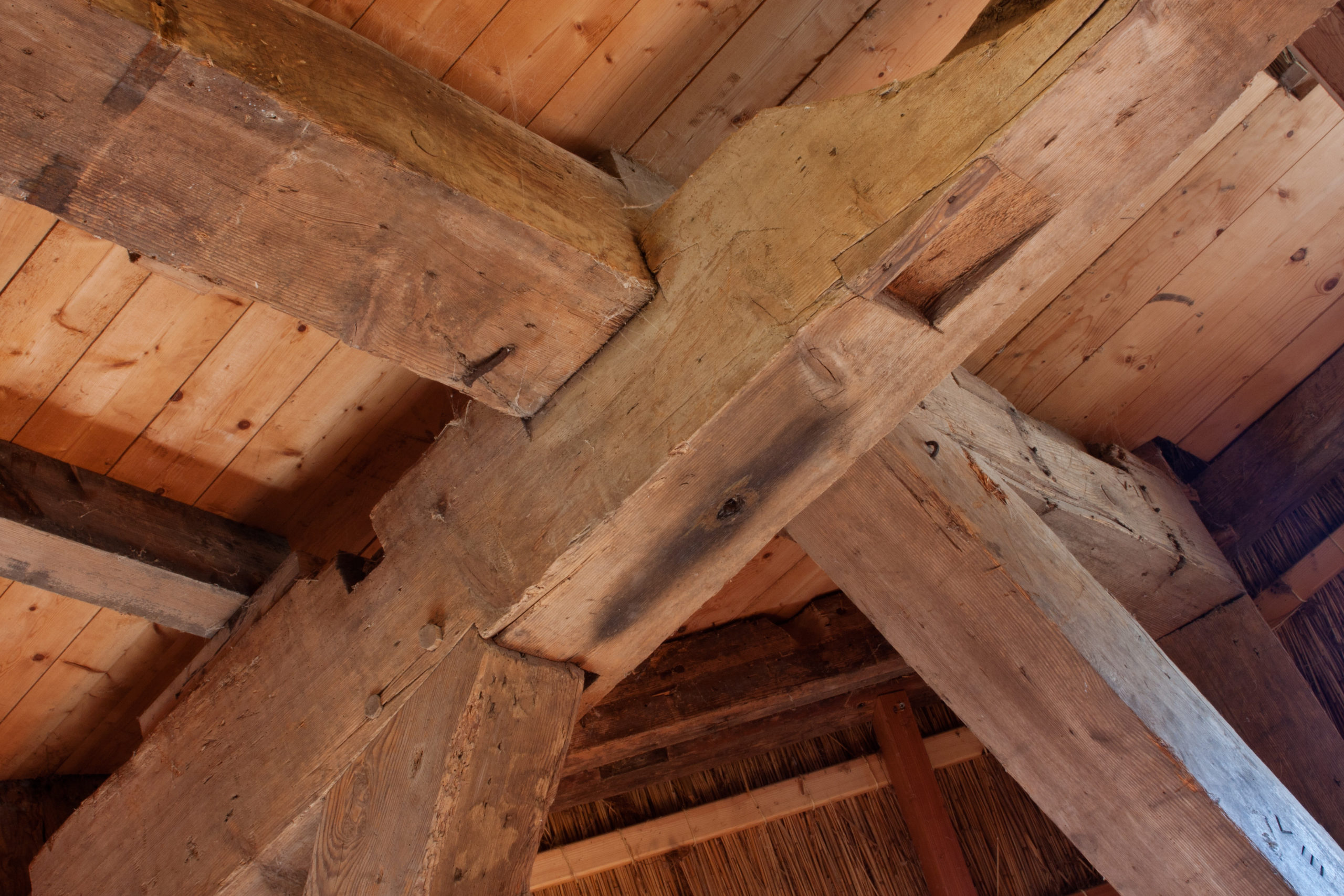
So why does wood crack? It’s one of the first questions homeowners ask when they spot fine splits opening along their new beams. Hamill Creek Timber Homes, a custom timber frame designer and manufacturer based in Meadow Creek, BC, has been answering that question for over 35 years. These cracks, known as checking, are part of how solid timber acclimates to its new home, not a sign that something is wrong. This guide explains what checking and shrinkage actually are, why they happen, and the practical steps that minimize their impact on your timber frame home.
Why Does Wood Crack as It Dries? Understanding Checking in Timber Frames
Checking is the term timberwrights use for the surface cracks that appear as a timber dries. So why does wood crack as it dries? The outer layers of a timber release moisture faster than the inner heartwood, creating internal stress that pulls the fibers apart along the grain. This is a normal, expected part of the drying process, and the timber actually gains strength as it loses moisture. A checked timber is not a damaged timber
Most checking shows up within the first one to three years after a timber frame is raised, then stabilizes as the wood reaches equilibrium with the moisture in its surrounding environment.
Many homeowners come to appreciate these natural marks as part of the character of their home, visible evidence that the timbers are real, living material rather than something engineered to look like wood.
How to Minimize Checking
Several timber-selection and finishing choices reduce the severity of checking:
- Specify “Free of Heart Center” timbers. Because checking originates at the heart of a log, timbers cut so the heart is removed will check less visibly.
- Choose air-dried or recycled timber. Air drying is slower and more even than kiln drying, which lets the wood release moisture without the stress that drives heavy checking. Recycled timber, sourced from dismantled buildings, has often had decades to stabilize and is exceptionally consistent.
- Apply a breathable sealer. A natural, breathable finish lets moisture escape gradually rather than trapping it inside the timber, which would force fibers to split more aggressively.
- Embrace some checking as part of the look. Some degree of checking will always appear in any exposed solid timber. The goal is to manage its appearance, not eliminate it.
Hamill Creek mills its own timber on-site at the Meadow Creek production facility, working with sustainably sourced Douglas Fir and Western Red Cedar from British Columbia’s managed forests. Handling raw timber through to finished frame under one roof means the team controls how each piece is dried and prepared, which produces a more stable finished frame for the homeowner.
Shrinkage in Timber Frames: Embracing Natural Movements
Shrinkage is the slight dimensional change a timber goes through as it loses moisture. Where checking is about cracks along the surface, shrinkage is about the timber itself becoming marginally smaller in cross-section. A 12-inch beam may end up a fraction of an inch narrower after a few years of acclimation, and that movement does not affect the structural integrity of the frame. Shrinkage is a natural property of solid wood, not a defect.
How to Minimize Shrinkage
Shrinkage cannot be eliminated, but it can be reduced through the same drying and species choices that reduce checking. Timber will eventually settle at what’s called equilibrium moisture content, the point where it neither gains nor loses moisture to the surrounding air. After that, small seasonal shifts are normal as indoor humidity rises and falls throughout the year.
The most effective ways to limit shrinkage:
- Specify lower-moisture-content timbers at the start of the project.
- Maintain a consistent indoor climate during the first few heating seasons.
- Allow time for the timber to settle before installing tight-tolerance trim, drywall, or millwork that abuts exposed beams.
This is the kind of detail Hamill Creek’s in-house design team plans for during the design phase. Every frame is engineered using 3D CAD modeling, with joints and connections detailed so the timber can move slightly without disturbing the surrounding construction.
Finishing and Maintenance for Longevity
Timber frame homes stand out for their durability and longevity, and the finish you apply plays a meaningful role in how well a timber ages. Before any Hamill Creek frame leaves the production facility, every piece is treated with two coats of water-based stain. Water-based finishes are chosen specifically because they allow the timber to continue releasing moisture after installation, which is exactly what you want during the early acclimation years. A finish that seals too aggressively traps moisture inside the timber and tends to make checking worse, not better.
During the first one to two heating seasons, a consistent indoor temperature helps the timber dry gradually rather than in rapid swings. Wood that goes through extreme temperature changes tends to develop more visible checking and faster shrinkage. A steady environment lets the timbers settle the way they were designed to.
Handling Sap Residue and Timber Frame Care
Some softwood timbers, particularly those that were not kiln-dried, can weep small amounts of sap when first exposed to interior heat. If a bead of sap appears on a beam, remove it gently with a dull putty knife and a Scotch pad lightly dampened with denatured alcohol. Regular paint thinner works as well. Test any solvent in an inconspicuous spot first, because cleaners can dull or lighten the surrounding stain, and work lightly to keep touch-up work to a minimum. Some stains and colors are more difficult to touch up than others, so a gentle approach pays off.
Annual Inspections and Re-Staining
Inspect exterior timbers each year and plan to reapply stain at least every four years, more often in harsh sun or wet climates. Dark-pigmented stains hold up better against UV exposure and give the timber underneath additional protection against premature graying. Interior timbers need very little maintenance because they’re protected from rain and direct sun. A periodic dusting and a check for any sap residue are usually all that’s required indoors. For a more detailed seasonal care schedule, see our timber frame home maintenance guide.
If you’ve ever asked “Why does wood crack?” and worried about what those marks mean for your home, the short answer is that they don’t mean much at all in terms of structure or longevity. Understanding the natural processes of checking and shrinkage lets homeowners enjoy the character of their timbers without second-guessing every fine split that appears.
Ready to Build or Maintain Your Timber Frame Home?
Hamill Creek has been crafting custom timber frame homes since 1989, and the company’s approach to checking and shrinkage starts long before a timber is cut. Sustainably harvested Douglas Fir and Western Red Cedar are matched to each project’s climate and finish goals. Frames are designed in-house using 3D CAD software and fully test-fit at the Meadow Creek facility before being disassembled, labeled, and shipped, so the on-site raising goes smoothly, and the timbers settle into their permanent home the way they were designed to. Whether you’re planning a new build or caring for an existing timber frame, the experienced timberwrights at Hamill Creek Timber Homes are here to guide you through every step. Contact Hamill Creek to talk through your project or get answers to any questions about caring for your timber frame home.
Frequently Asked Questions About Wood Cracks and Timber Frame Care
Wood cracks because moisture leaves the outer layers of a timber faster than the inner heartwood, creating internal stress that pulls the fibers apart along the grain. The result is called checking, a normal part of how solid timber dries and acclimates to its environment. Checking does not weaken a timber. Wood becomes stronger as it loses moisture and settles into equilibrium with the air around it.
No, checking is not a structural concern. Surface cracks form along the grain as a timber dries and have no effect on the timber’s load-bearing capacity. Every timber frame Hamill Creek delivers is engineered with the natural drying behavior of solid wood in mind, so structural performance is calculated around the dry, settled timber, not the as-cut moisture content.
No, some degree of checking will always appear in exposed solid timber. It can be significantly minimized by specifying “Free of Heart Center” timbers, choosing air-dried or recycled wood, applying a breathable sealer, and keeping a consistent indoor temperature during the first few years. These measures reduce the severity and visibility of checks rather than eliminate them completely.
Shrinkage depends on the moisture content of the timber at installation and the climate where the home is built. Most of the visible change happens within the first one to three years as the wood reaches equilibrium with its surroundings, with minor seasonal movement continuing as indoor humidity shifts through the year. The total dimensional change is small, typically a fraction of an inch on a large beam.
Checking generally stabilizes once a timber reaches equilibrium moisture content with its environment, usually within the first one to three years. Seasonal humidity swings can cause minor expansion and contraction, but the cracks do not meaningfully deepen or lengthen after that initial settling period.
Keep the indoor temperature steady through the first heating season, use a breathable sealer that allows moisture to escape from the timber gradually, and inspect exterior timbers each year. Reapply stain on exposed exterior timbers at least every four years, and choose a darker pigment in high-UV locations to give the wood extra protection.
Wipe sap away gently with a dull putty knife and a Scotch pad lightly dampened with denatured alcohol or paint thinner. Test the solvent in an inconspicuous spot first to make sure it doesn’t dull the surrounding finish, and work lightly to keep touch-up work to a minimum.
Yes, denser species tend to check differently than lighter ones, and the cut of the timber matters as much as the species. Specifying “Free of Heart Center” timbers reduces checking across any species because the heart center is where checking tends to originate. At Hamill Creek, species selection is part of the design conversation, weighing strength, appearance, and how each species behaves as it dries.
Blog Archive / Celebrating the 20th Anniversary of the Kokanee Glacier Alpine Cabin