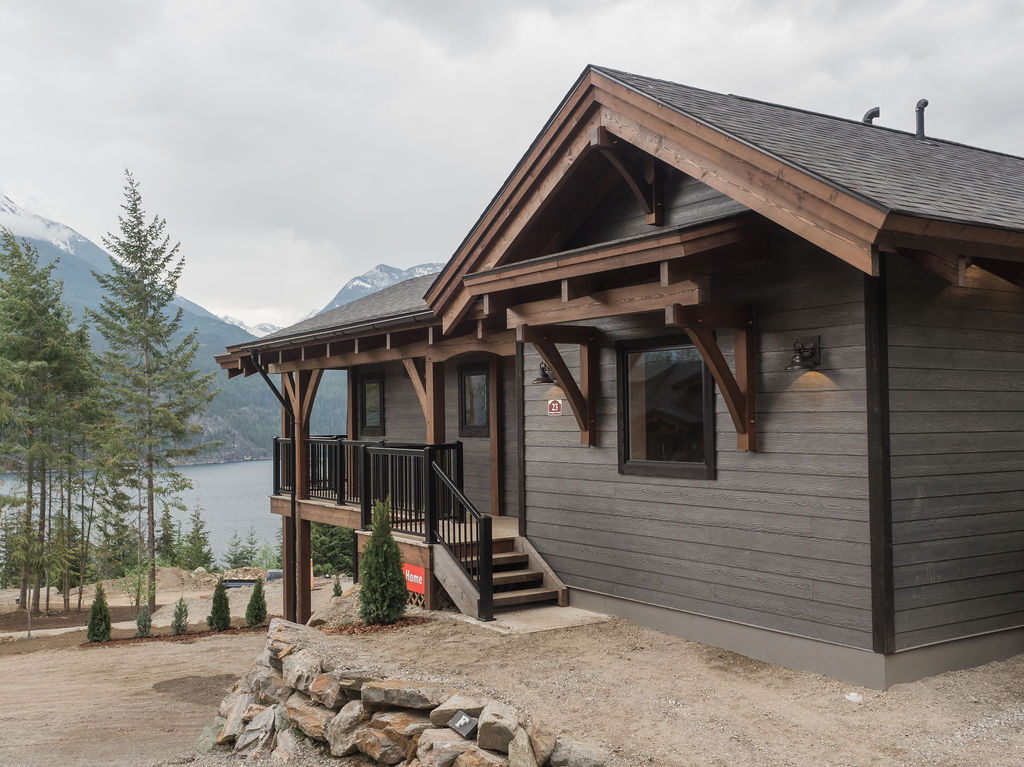
Your home is likely the largest investment you’ll ever make, and a timber frame home rewards owners who judge it over decades, not the price on day one. This article looks at timber frame home resale value as an investment: the return, how it compares with conventional construction, and the trends behind demand. Hamill Creek Timber Homes is a specialist timber frame designer and manufacturer with more than 35 years of experience, based in Meadow Creek, British Columbia, and shipping custom frames across North America. Founder Dwight Smith encourages clients to look past the upfront cost and weigh the full life of the home: a timber frame is an investment in craftsmanship, durability, and a legacy that serves generations.
What Drives Timber Frame Resale Value
Timber frame home resale value comes down to qualities buyers can see and feel: exposed structural timber, honest craftsmanship, and a home that performs for decades. Hamill Creek frames use traditional mortise and tenon joinery secured with oak pegs, cut from sustainably sourced Douglas Fir and Western Red Cedar, so the structure becomes the architectural centerpiece rather than something you’d hide behind drywall.
A few qualities do most of the work when it’s time to sell:
- Craftsmanship and materials: Hand-fitted joinery and quality timber read as care and permanence, and buyers reward that.
- Energy performance: SIPs, the structural insulated panels used for the enclosure, deliver strong thermal performance and lower running costs.
- Distinctive design: Open floor plans, exposed beams, and natural light give the home character conventional builds struggle to match.
- Longevity: A well-built frame lasts for generations, which protects value over time. Our guide to timber frame home lifespan and durability covers this in depth.
Founder Dwight Smith makes the same point: the homes that hold their value pair beauty with sound design and real performance, and buyers consistently notice timber quality, craftsmanship, natural light, the connection to the outdoors, and efficiency.
Investment Analysis: Upfront Cost Versus Long-Term Value
A timber frame home costs more upfront than a stick-built house, and that gap is the heart of the investment question. A timber frame kit runs $60–$100 per square foot for the structure; a complete turn-key home ranges from $350–$500 per square foot depending on finishes and complexity. For the full breakdown, see our timber frame home cost guide.
The return is clearer once you treat the frame as the part of the home that lasts. A timber frame kit is typically about 5–15% of total build cost while delivering roughly 95% of the visual impact, a strong argument for putting your money where it shows most.
| Option | Typical Cost | Value Angle |
|---|---|---|
| Timber Frame Kit | $60–$100/sqft | Structure, engineering, oak pegs, and hardware; about 5–15% of build cost for roughly 95% of the visual impact |
| Hybrid Timber Frame Home | Design package from $125/sqft | Concentrates timber where it makes the biggest impression, keeping character while controlling cost |
| Complete Turn-Key Home | $350–$500/sqft | Fully finished custom home; varies with location, design, and finishes |
Dwight Smith frames the premium as a choice about where to invest, not a pricier version of a conventional house. Clients put roughly 10–15% more into the structure, craftsmanship, and design at the outset, because those elements shape how the home feels for the next 20, 30, or 50 years. On price per square foot alone, that value is easy to miss; over the life of the home, it’s where resale value is built. Cost ranges shift with materials and market conditions, so it’s worth confirming current figures for your project.
Timber Frame Versus Conventional Construction: The Value Comparison
Against conventional construction, a timber frame house competes on what survives a resale inspection and a buyer’s first walk-through. Stick-built homes hide 2×4 framing behind drywall, while a timber frame puts the structure on display, offers superior fire resistance from heavy timber, and pairs open floor plans with SIPs insulation for strong thermal performance.
Post and beam is the closest cousin, and that’s where the difference matters for longevity. Post and beam relies on steel plates and bolts as its standard connection, while a Hamill Creek timber frame is built around mortise and tenon joinery and oak pegs, with metal hardware used only where an engineer prescribes it or a client prefers the look. That all-wood joinery is what makes the frame more elegant and longer-lasting. For a fuller side-by-side, see our comparisons of timber frame vs post and beam and log homes and timber frame vs steel frame homes.
Market Trends Shaping Timber Frame Demand
Demand for timber frame homes is shaped by buyers who’ve grown deliberate about where their money goes. They still want the beauty and character of exposed timber, but they now ask just as often about energy efficiency, maintenance, flexibility, and long-term performance. Many concentrate the timber frame where it has the biggest visual impact, a practical trend that keeps character high while managing cost.
This is a specialized market, not a mass one, and that cuts both ways at resale. In desirable mountain and lakefront regions and craftsmanship-minded communities, a well-built home stands out and draws committed buyers. In a thinner market, that distinctiveness can mean a longer search for the right buyer, so location and design choices matter. Hamill Creek works with clients across North America, which helps match each home to the places where timber framing is most wanted.
How to Maximize Your Timber Frame Home’s Resale Value
The choices that protect timber frame home resale value are usually the ones you can’t easily change later. Dwight Smith advises clients to invest first in what’s hard to change later: the layout, the home’s fit to its site, the structure and building envelope, natural light, the outdoor connection, and flexible spaces that adapt as a family changes. Make the timber frame distinctive, he adds, without letting the rest of the home chase trends, so it reads as lasting character rather than a dated remodel.
A few practical steps help protect the resale value of a timber frame house:
- Design for timeless, open layouts: Rooms that flow and adapt age better than of-the-moment floor plans.
- Invest in the envelope: SIPs and a tight enclosure deliver the energy efficiency and thermal performance buyers expect.
- Choose durable species: Douglas Fir for strength and grain, and Western Red Cedar for its natural rot and insect resistance outdoors.
- Maintain the timber: Keep finishes current and address moisture early so the frame stays sound.
- Work with an experienced specialist: Precision at the design and build stage shows up decades later.
Long-term value starts with getting the frame right the first time. Every Hamill Creek timber frame is test-fit at the Meadow Creek facility before it’s taken apart for shipping, and the team stays involved through the build, so the joinery fits precisely on site and the finished home performs as designed.
Timber Frame Resale Value: Common Questions
Yes. Timber frame homes tend to hold their value well because their craftsmanship, durability, and distinctive exposed structure appeal to buyers who prize quality. A well-built and well-maintained home can remain desirable for generations, which supports strong resale value.
For buyers focused on the long term, a timber frame home is often a sound investment. The higher upfront cost goes into the structure, craftsmanship, and design, the elements that shape how the home looks and performs over decades. Judged over the full life of the home rather than by price per square foot, that is where lasting value is built.
Timber frame homes usually cost more upfront than stick-built homes. A timber frame kit runs about $60 to $100 per square foot for the structure, and a complete turnkey home ranges from about $350 to $500 per square foot depending on finishes, location, and complexity. These ranges vary with materials and market conditions and should be confirmed for a specific project.
Timber frame homes can last well over 100 years when they are properly built and maintained, and that longevity is a major reason they hold their resale value. The mortise and tenon joinery and quality timber are made to endure for generations.
Building Value That Lasts for Generations
A timber frame home is both a place to live and an asset built to last. Its resale value rests on craftsmanship, a lifespan measured in generations, strong energy performance, and a distinctive look that keeps drawing buyers long after the frame is raised. Hamill Creek Timber Homes has designed and manufactured custom timber frame homes for more than 35 years, controlling quality from its own sawmill in Meadow Creek, British Columbia, through CNC precision, test-fitting, and full service from design through raising.
Your dream timber frame home starts with the right design and the right team. Connect with our timber frame specialists to bring your vision to life.
Blog Archive / U.S. Tariffs on Canadian Lumber: What’s Happening Now and What’s Next